Structural & Vascular
Pleural Effusion / Empyema / Pneumothorax
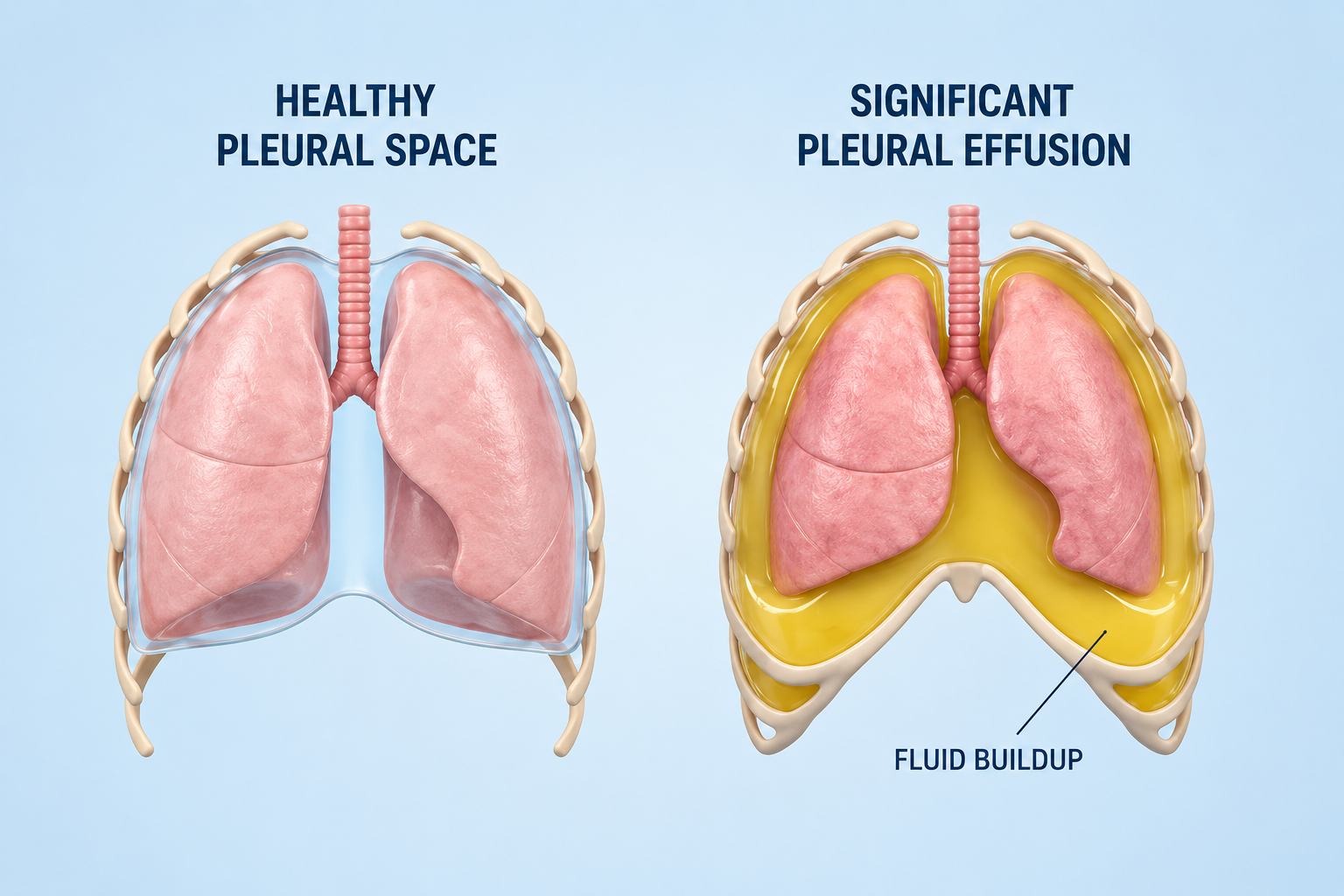
Pleural diseases affect the thin lining that surrounds the lungs. Fluid (pleural effusion), pus (empyema), or air (pneumothorax) can accumulate in this space and compress the lung, causing breathlessness. Many of these conditions can be treated with a minimally invasive procedure performed in the clinic or hospital.
Symptoms to Watch
- Sudden or gradually worsening shortness of breath
- Sharp, one-sided chest pain that worsens when breathing in
- Dry cough
- A feeling of heaviness or pressure on one side of the chest
- Fever and chills if infection is present
- Rapid heart rate
- In severe pneumothorax: sudden, severe breathlessness and chest pain requiring immediate care
How We Diagnose
- 1Chest X-ray to detect fluid or air in the pleural space
- 2Ultrasound to safely guide fluid drainage and quantify the amount of fluid
- 3CT scan of the chest to assess the underlying cause of the effusion
- 4Pleural fluid analysis — after sampling — for protein, cells, and infection markers
- 5Blood cultures and inflammatory markers if infection is suspected
Your Treatment Plan
- Diagnostic and therapeutic pleurocentesis (pleural tap) to remove and analyse fluid
- Intercostal chest drain insertion for large effusions, empyema, or pneumothorax
- Antibiotics for infected collections including empyema
- Investigation and treatment of the underlying cause — heart failure, malignancy, or infection
- Coordination with thoracic surgery for complex, recurrent, or surgical cases
- Pleurodesis for recurrent malignant pleural effusions to prevent reaccumulation
When to See a Doctor
Go to an emergency department immediately if you develop sudden severe breathlessness or sharp one-sided chest pain — pneumothorax can worsen rapidly and requires urgent treatment.